Milk vs. formula… under the microscope

September 8, 2011. Posted in: Blog Posts,Milk

We just got a digital camera attachment for our microscope, so what do you think I photographed first?

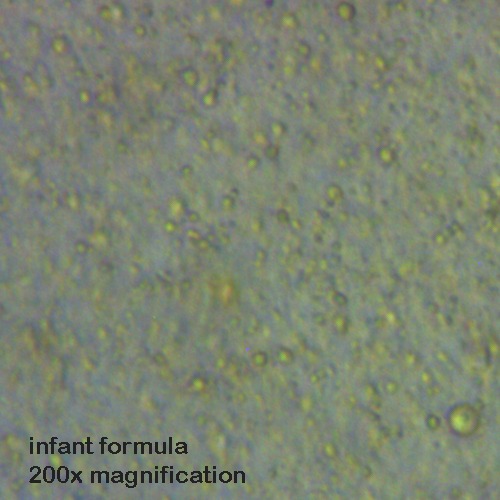
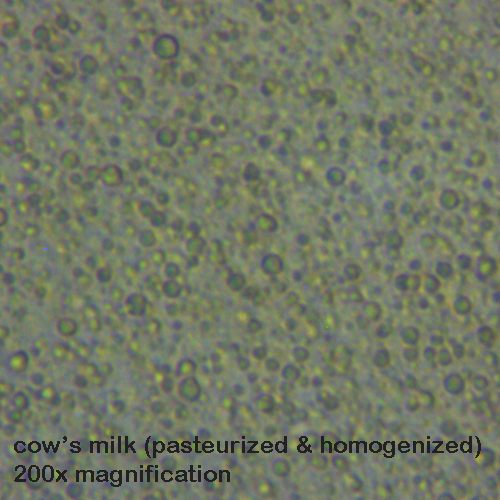
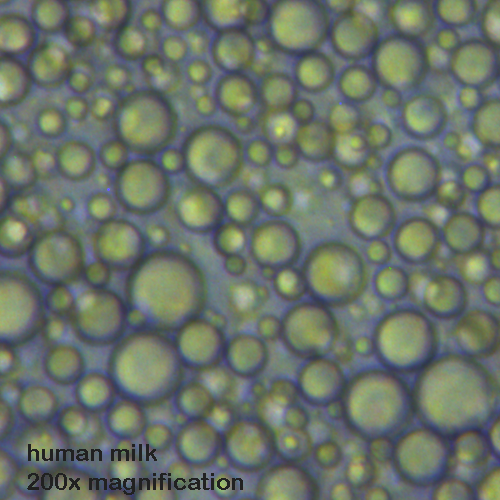
All three photos were taken with the exact same magnification, lighting, and all other microscope/camera settings. The color shows more detail than black & white, so I left it alone (even though all the colors may seem unusual coming from three white drops of milk).


Related Posts Plugin for WordPress, Blogger...
  • Walkinwalkoutcattle

    Dumb question…are those fat cells?  What are those?

  • Walkinwalkoutcattle

    Dumb question…are those fat cells?  What are those?

  • Linar98

    What are the bubbles?

  • Linar98

    What are the bubbles?

  • Linar98

    What are the bubbles?

  • Cynthiamb88

    as the previous poster stated. very cool but what does it all mean?

  • Cynthiamb88

    as the previous poster stated. very cool but what does it all mean?

  • Iiicrazycats

    Awesome! As a lab geek, I’m thoroughly impressed and only a little jealous that I didn’t think to do this myself!

  • Iiicrazycats

    Awesome! As a lab geek, I’m thoroughly impressed and only a little jealous that I didn’t think to do this myself!

  • HappyMom07

     Even if you weren’t trying to spark a debate… comparing formula, Cows milk and breast milk will always make for some interesting conversation.  I proudly formula fed both my babies. They are healthy, thriving children and doing just fine. 
    As long as the baby is healthy and happy, and mommy is happy then it does not matter wether or not they drink breast milk, cow milk or formula. 

    • HouseOfScience

      They might be happy and healthy now…..but, their long term health risks are increased because they didnt consume breastmilk!

  • HouseOfScience

    They might be happy and healthy now…..but, their long term health risks are increased because they didnt consume breastmilk!

  • Newbie

    I wonder how goats milk would’ve looked since they say it’s the closest to human milk? That’s pretty neat. It’s also so neat to see that the three are nothing alike!

    • Aimster770

      I thought my BF son was having issues with cows milk on transition at 12m so I tried goats milk just to see how that would go…and man!  that was soooo painful for him.  He had gas that was so painful for him that his screamed bloody murder every time he needed to pass it.  At first I could figure out what it was, then…when I didn’t give him goats milk one day to see what would happen he wasn’t in as much pain.  The next day I gave him a little to see and sure enough!  I felt sooooo bad for him!  Lesson learned!
       

  • QueenHoneyB

    I’m not sure what the photos mean either. Are those fat cells? Hm, maybe you should do a magnification of breast milk comparing fore milk to hind milk!

  • Newbie

    I wonder how goats milk would’ve looked since they say it’s the closest to human milk? That’s pretty neat. It’s also so neat to see that the three are nothing alike!

    • Amber H

      Actually, the animal with the closest composition to breastmilk is the donkey, followed by the mare. http://en.m.wikipedia.org/wiki/Asses%27_milk_(Donkey%27s_milk) there’s a chart comparing the milk compsition of donkey milk, mare’s milk, human milk and cow’s milk.

    • Aimster770

      I thought my BF son was having issues with cows milk on transition at 12m so I tried goats milk just to see how that would go…and man!  that was soooo painful for him.  He had gas that was so painful for him that his screamed bloody murder every time he needed to pass it.  At first I could figure out what it was, then…when I didn’t give him goats milk one day to see what would happen he wasn’t in as much pain.  The next day I gave him a little to see and sure enough!  I felt sooooo bad for him!  Lesson learned!
       

  • QueenHoneyB

    I’m not sure what the photos mean either. Are those fat cells? Hm, maybe you should do a magnification of breast milk comparing fore milk to hind milk!

  • Sarah

    I also would like to know what it all means.  :)

  • Sarah

    I also would like to know what it all means.  :)

  • JC

    I think the breast milk looks different because of the large fat globules. What would be more impressive is to stain the living cells in the milk so that you can see them in the cow and breast milk. Of course their aren’t any in formula.

    • Natalie

      And there aren’t any in pasteurized milk either or at least very little…

  • JC

    I think the breast milk looks different because of the large fat globules. What would be more impressive is to stain the living cells in the milk so that you can see them in the cow and breast milk. Of course their aren’t any in formula.

  • JC

    I think the breast milk looks different because of the large fat globules. What would be more impressive is to stain the living cells in the milk so that you can see them in the cow and breast milk. Of course their aren’t any in formula.

    • Natalie

      And there aren’t any in pasteurized milk either or at least very little…

  • Maggie Roberts

    Very interesting. Looks fattier…

  • Maggie Roberts

    Very interesting. Looks fattier…

  • Maggie Roberts

    Very interesting. Looks fattier…

  • Mandy Brzezinski

    Lol the breast milk is prettier X)

  • Mandy Brzezinski

    Lol the breast milk is prettier X)

  • anonymous

    I’m not certain what it all means, but I can see this— no matter what the formula companies claim, it’s not the same thing as breastmilk… apparently not even close.

  • anonymous

    I’m not certain what it all means, but I can see this— no matter what the formula companies claim, it’s not the same thing as breastmilk… apparently not even close.

  • Caldwell646

    Wow! Just Wow!

  • Caldwell646

    Wow! Just Wow!

  • Rachael

    I’m guessing these are casein micelles, whey proteins and milk fat globules that are found in living substances such as breastmilk. 

  • Rachael

    I’m guessing these are casein micelles, whey proteins and milk fat globules that are found in living substances such as breastmilk. 

  • Shelia

    Can you now add goats milk and soy milk to see the comparison to these three?

  • Shelia

    Can you now add goats milk and soy milk to see the comparison to these three?

  • Liza

    Look at those lush, beautiful fat cells in human milk. So good for baby’s brain and nervous system!

  • Liza

    Look at those lush, beautiful fat cells in human milk. So good for baby’s brain and nervous system!

  • AndreaH

    Very interesting, but we definitely need some more info as to what we’re looking at and what it means. :) I assumed it was fat too (the big bubbles), but I’m no scientist. I suppose on the most basic level, it shows how different they all are. But anyone tasting them would know that :)

  • AndreaH

    Very interesting, but we definitely need some more info as to what we’re looking at and what it means. :) I assumed it was fat too (the big bubbles), but I’m no scientist. I suppose on the most basic level, it shows how different they all are. But anyone tasting them would know that :)

  • guest

    This makes me want a microscope.

  • guest

    This makes me want a microscope.

  • Fmunion

    human milk is beautiful : )

  • Fmunion

    human milk is beautiful : )

  • Silverpixels

    Do you know what this proves other than that they are different?

  • Silverpixels

    Do you know what this proves other than that they are different?

  • Msteachu2

    Does this mean that even cow’s milk is better for infants than formula? My son is 11 months old and deciding to transition. He was nursed for 6 months.

  • Msteachu2

    Does this mean that even cow’s milk is better for infants than formula? My son is 11 months old and deciding to transition. He was nursed for 6 months.

  • Stultsj

    Looks like bubbles. I would try it again to see if you can visualize any cells.

  • Stultsj

    Looks like bubbles. I would try it again to see if you can visualize any cells.

  • nancy

    Homogenization breaks up the fat globules into smaller units to prevent the milk from separating into skim and cream. Formula is made from homogenized, dried milk (and who knows what else). These photos only illustrate that breast milk is not homogenized. I imagine raw cow breast milk would look pretty much the same at 200x. Pretty pictures, but it doesn’t mean much. (I’m speaking as someone who breastfed each of my children until they were nearly 3 years old. I am most definitely not debating the increased health risks formula-fed children face.)

    I, too, would love to see some live cell stains and greater magnification. :)

    • Rachael

      Milk’s basic ingredients are fat, proteins, lactose, vitamins, minerals, and water. This is true of milk from all kinds of mammals. Yet, the proportions of these ingredients differ, as do the kinds of protein and fat. This is what makes each species’ milk uniquely suited to its young. I think what we are seeing here is a demonstration at low magnification that infant formula contains no living cells and is static in nature. you can see that breastmilk is live and teaming with cells. The cows milk contains some, but many of the living components have been killed off due to the heat treatment that it undergoes, it also changes the composition of the nutritional elements, for example calcium becomes ‘hard’ and difficult to digest. It would be interesting to see raw organic cows milk for comparison. 

    • MamaEvaUSA

      one of the main ingredients in formula or artificial baby milk (ABM) is CORN SYRUP. yuck.

  • nancy

    Homogenization breaks up the fat globules into smaller units to prevent the milk from separating into skim and cream. Formula is made from homogenized, dried milk (and who knows what else). These photos only illustrate that breast milk is not homogenized. I imagine raw cow breast milk would look pretty much the same at 200x. Pretty pictures, but it doesn’t mean much. (I’m speaking as someone who breastfed each of my children until they were nearly 3 years old. I am most definitely not debating the increased health risks formula-fed children face.)

    I, too, would love to see some live cell stains and greater magnification. :)

    • Rachael

      Milk’s basic ingredients are fat, proteins, lactose, vitamins, minerals, and water. This is true of milk from all kinds of mammals. Yet, the proportions of these ingredients differ, as do the kinds of protein and fat. This is what makes each species’ milk uniquely suited to its young. I think what we are seeing here is a demonstration at low magnification that infant formula contains no living cells and is static in nature. you can see that breastmilk is live and teaming with cells. The cows milk contains some, but many of the living components have been killed off due to the heat treatment that it undergoes, it also changes the composition of the nutritional elements, for example calcium becomes ‘hard’ and difficult to digest. It would be interesting to see raw organic cows milk for comparison. 

    • MamaEvaUSA

      one of the main ingredients in formula or artificial baby milk (ABM) is CORN SYRUP. yuck.

  • http://freeyourparenting.com/ Clare Kirkpatrick

    Wow! That’s so cool to see such a difference! Do you know what all the different bits are?